The Fight To Keep Christian Values In American Conservativeism
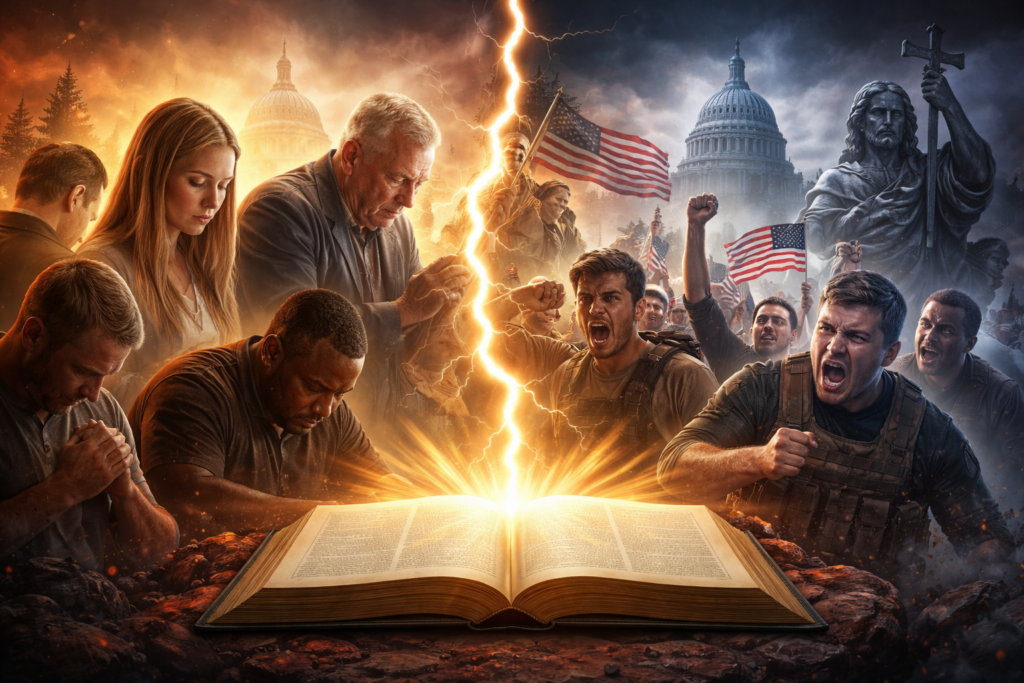
What we are witnessing in American conservatism is bigger than a normal political disagreement. This is not just a fight over foreign policy, Israel, or what “America First” should mean. Beneath the headlines, there appears to be a deeper struggle over who will shape the moral and theological foundation of the Republican base for the next generation. For decades, evangelical Christians have been a driving force in conservative politics, bringing with them biblical conviction, church networks, and a strong commitment to the Judeo-Christian worldview. But now there are growing signs that this foundation is being challenged by voices and movements that do not simply want to influence the conversation, they want to redefine it entirely.
According to this perspective, the battle is being fought on multiple fronts at once. It is happening in media, where major personalities are reframing evangelical beliefs as outdated, manipulated, or even dangerous. It is happening online, where younger conservatives are being exposed to content that chips away at confidence in biblical authority, mocks Protestant theology, and normalizes ideas that once would have been rejected outright in conservative spaces. It is happening institutionally, through think tanks, intellectual circles, and political networks that increasingly reflect a worldview very different from the one that built the modern conservative movement. The real concern is not simply a policy shift, but a spiritual and cultural realignment that could leave evangelicals sidelined inside a movement they helped build.
What makes this even more serious is the claim that many ordinary voters do not fully see what is happening. The frustrations that fueled populist energy in recent years were real: failed wars, economic decline, political betrayal, and elite contempt for everyday Americans. But the argument here is that those legitimate grievances are now being used as a gateway to push something far more radical. Young conservatives, especially young men, are being drawn into movements that offer certainty, identity, brotherhood, and a sense of spiritual purpose, but often with an ideological foundation that is hostile to the very evangelical theology that once anchored conservative politics. In that sense, the concern is not only political. It is pastoral. It is about who will disciple the next generation, who will shape their worldview, and whether they will still recognize the biblical convictions that once defined the movement.
The warning is clear: if this trend continues unchecked, the Republican Party of the next decade may have a very different soul than the one many Christians think they are defending today. The issue is not whether Catholics as a whole are the problem, nor is it an attack on every conservative figure now in the spotlight. The deeper issue is whether a slow but deliberate ideological transformation is taking place under the surface, one that weakens evangelical influence, erodes support for Israel, and replaces a biblical framework with something harder, more sectarian, and less rooted in the Protestant convictions that have shaped American conservatism for generations. Whether one agrees with every point or not, the central message is unmistakable: this is a moment for discernment, vigilance, and clarity, because what is at stake is not just a party platform, but the spiritual identity of a movement.
The biblical response to a moment like this is not panic or hostility. Scripture gives a clear path for believers when confusion and competing voices rise. First, the church must return to the authority of the Word of God. Acts 17:11 praises the Bereans because they searched the Scriptures daily to test what they were hearing. When believers know the Bible deeply, they cannot easily be manipulated by shifting narratives or persuasive personalities. The strength of the church has never been political power. It has always been the truth of God’s Word rooted in the hearts of His people.
Second, the church must disciple the next generation intentionally. Jesus commanded in Matthew 28:19–20 to “make disciples of all nations… teaching them to observe all things that I have commanded you.” If young believers are searching for identity, purpose, and brotherhood, the church must be the place where they find it first. Strong teaching, authentic community, and spiritual mentorship create the kind of foundation that outside ideologies cannot easily shake.
Finally, believers must remain anchored in love, humility, and prayer. Ephesians 6 reminds us that our struggle is not against flesh and blood, but against spiritual forces. The solution is not bitterness or division, but spiritual clarity and faithfulness. Christians are called to stand firm in truth, pray for wisdom, and continue proclaiming the gospel. When the church remains rooted in Christ, grounded in Scripture, and committed to discipling people well, it becomes very difficult for any outside movement to redefine its identity. The answer has always been the same: return to the Word, raise up disciples, and keep Jesus at the center.
About Post Author